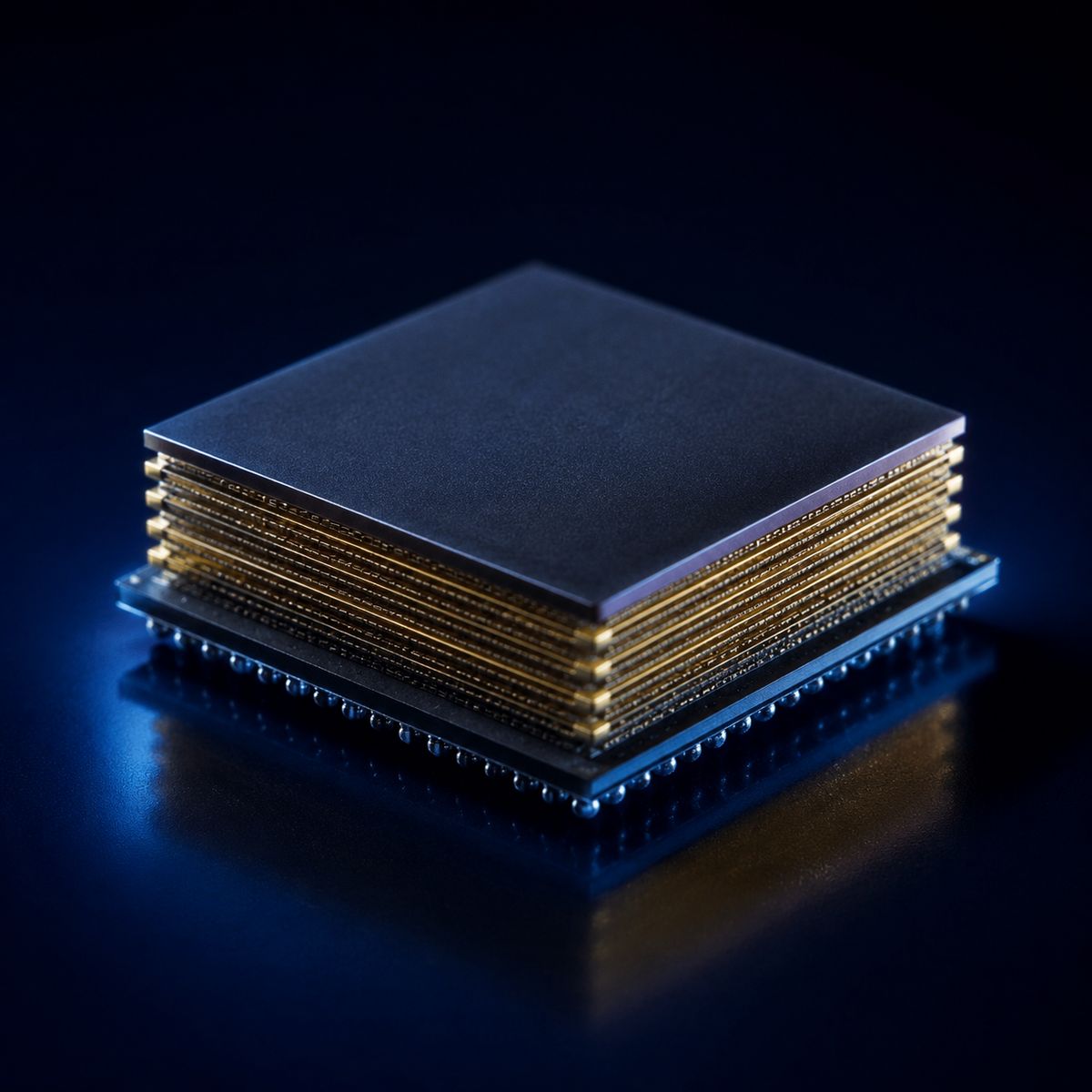
Let me tell you what three weeks of Samsung strike coverage taught me about why SK Hynix is structurally better positioned for this supercycle, even though both companies make the same chips.
The Setup
Samsung and SK Hynix are the two dominant players in High Bandwidth Memory. Both are Korean. Both are benefiting enormously from the AI infrastructure buildout. On the surface they look like the same trade.
They are not the same trade.
One is a pure play memory company. One is a sprawling conglomerate that happens to have a world class memory division inside it. That difference matters enormously when profits become extraordinary enough to attract attention from everyone who wants a share.
What Just Happened
Samsung's semiconductor division posted 53.7 trillion won in operating profit in a single quarter. Their memory business is printing money at a rate that has never existed in the history of the industry. Semiconductor exports surged 139% year over year to $78.5 billion in Q1 alone.
That extraordinary profitability triggered something nobody planned for. 48,000 workers decided they wanted a piece of it.
The union demanded 15% of semiconductor operating profits annually. At Q1's pace, annualized semiconductor profits could exceed 200 trillion won. That works out to roughly 30 trillion won in annual bonuses. Samsung management balked. Not because they couldn't afford it. Because Samsung is not just a memory company.
Here is the problem Samsung management was actually trying to solve. The smartphone division is struggling. The display division is losing money. The home appliance division is barely breaking even. If semiconductor workers get 15% of semiconductor profits as annual guaranteed bonuses, every other division in Samsung Group demands the same formula applied to their business. The math gets uncomfortable very fast across a company with hundreds of thousands of employees in divisions that are not profitable.
SK Hynix does not have this problem. At all.
SK Hynix makes memory. That is it. When memory profits explode, the entire company benefits. There are no loss making TV divisions creating precedent problems. No smartphone workers watching the semiconductor team get rich and feeling short changed. No conglomerate politics diluting management focus. Every employee at SK Hynix is in the memory business. When memory wins they all win together.
That is why SK Hynix workers already have their deal done. $477,000 in bonuses this year projected to reach $900,000 next year, agreed without a single day of strike action. Management signed that without a strike because the math was mathing. Pure play profits going to pure play workers. No cross divisional complications.

The Face Saving Reality
Korean negotiating culture is something Western financial media consistently underestimates. Face saving matters more than outcome sometimes. The choreography of a Korean corporate dispute is as important as the substance.
What I watched over three weeks was not really about the percentage. It was about who would move first and how they could do it without losing face. Samsung management rejected the government mediation proposal that the union had already accepted. They were not rejecting the deal. They were rejecting being seen as the party that capitulated to union demands. The Labor Minister personally stepping in gave Samsung a way to say yes without looking like they reversed their position. They accepted a government brokered deal rather than a union demand. Same outcome. Different optics.
Koreans are hard negotiators. And face saving is sometimes more important than the outcome itself. Both sides understood this. The strike lasted zero days. The drama lasted three weeks.
The Structural Difference in Plain Terms
During those three weeks SK Hynix was not dealing with any of this. Their workers had already signed their decade long bonus agreement. Their management was focused entirely on ramping HBM4 production, managing the unprecedented customer offers flowing in, and figuring out how to allocate zero available capacity among customers who were offering to fund their factories.
Samsung management spent three weeks in government mediation rooms in Sejong while SK Hynix management was running the most in demand semiconductor operation on earth without distraction.
That is what pure play looks like versus conglomerate in a supercycle. When everything is going right the conglomerate structure creates internal conflicts that consume management attention at exactly the moment focus matters most.
What About Micron?
Micron is the American wildcard in this story and it deserves its own honest assessment.
Micron is also a pure play memory company like SK Hynix. No conglomerate baggage. No cross divisional bonus complications. Just DRAM, NAND, and HBM. In that sense it shares SK Hynix's structural cleanliness.
But Micron has something neither Samsung nor SK Hynix has. It is American.
In a world where semiconductor sovereignty has become a national security priority, being the only US based advanced memory manufacturer is an increasingly valuable structural advantage that has nothing to do with technology. The CHIPS Act directed billions toward domestic semiconductor manufacturing. Micron is the primary beneficiary. Government subsidized fab expansion in Idaho and New York means Micron is building capacity with partial taxpayer support that Samsung and SK Hynix simply do not have access to.
There is also a customer relationship dimension. American hyperscalers, Microsoft, Google, Meta, Amazon, have quiet but real preferences for domestic suppliers when supply is constrained and geopolitical risk is elevated. Micron sits at the intersection of those preferences in a way its Korean competitors cannot replicate.
The trade off is technology. Micron was behind on HBM3 ramp. They are catching up on HBM4 but SK Hynix remains the leader on Nvidia's most critical platforms. The technology gap is closing but it is real.
So the honest three way comparison looks like this.
SK Hynix: Pure play, technology leader on HBM, management fully focused, workers already aligned, no structural baggage. The cleanest expression of the supercycle.
Micron: Pure play, US based, government backed, hyperscaler preferred, technology catching up. The geopolitical hedge inside the thesis.
Samsung: Conglomerate, largest market share, technology competitive, but carrying structural weight that creates friction at exactly the wrong moments. Still essential. Still profitable. Just slower to move.
All three are in the ETF. Understanding the differences tells you why the ETF behaves the way it does, SK Hynix and Micron absorbing redirected orders and investor enthusiasm every time Samsung creates uncertainty.
The Samsung strike was not just a labor story. It was a three week demonstration of structural differences playing out in real time.
The Investment Implication
I hold both through the DRAM ETF. I am not going to deal with Korean won currency risk or KRX settlement complexity to separate them. But understanding the structural difference matters for how I think about the thesis.
SK Hynix is the cleaner expression of the memory supercycle. Pure exposure. No conglomerate noise. Workers already aligned. Management focused. HBM4 ramp ahead of Samsung on Nvidia's Rubin platform.
Samsung is the larger company, the one that reclaimed the top DRAM market share position, and ultimately the one that will resolve its internal structural issues over time. The strike is over. Workers vote on the deal Saturday. Operations resume fully. Samsung is not broken.
But if you are trying to understand why SK Hynix's stock has outperformed Samsung significantly during the same supercycle, the answer is not technology. It is politics and structure.
Pure play wins when the cycle is strong. The conglomerate carries baggage that slows it down exactly when speed matters most.
The Irony
Samsung management made all the right moves to position the company for the AI memory supercycle. Years of HBM investment. Aggressive capex. Reclaiming the top market share position. They did the work.
Then 48,000 workers decided that the company's success was also their success and demanded their share of the windfall.
I understand the frustration of management. No employee should hold the company hostage because the company made the right strategic moves. The pricing power Samsung earned came from capital allocation decisions, technology investment, and risk taking that workers did not participate in when times were harder.
But that argument is harder to make when you are a conglomerate where the wins and losses are unevenly distributed across divisions. SK Hynix does not have to make that argument. Everyone in that company is in the same boat.
That is the structural advantage that does not show up in any analyst model.
I hold a position in DRAM ETF (ticker: DRAM) which includes exposure to both Samsung and SK Hynix. Not investment advice. Do your own research.

My current positions as of May 21, 2026.