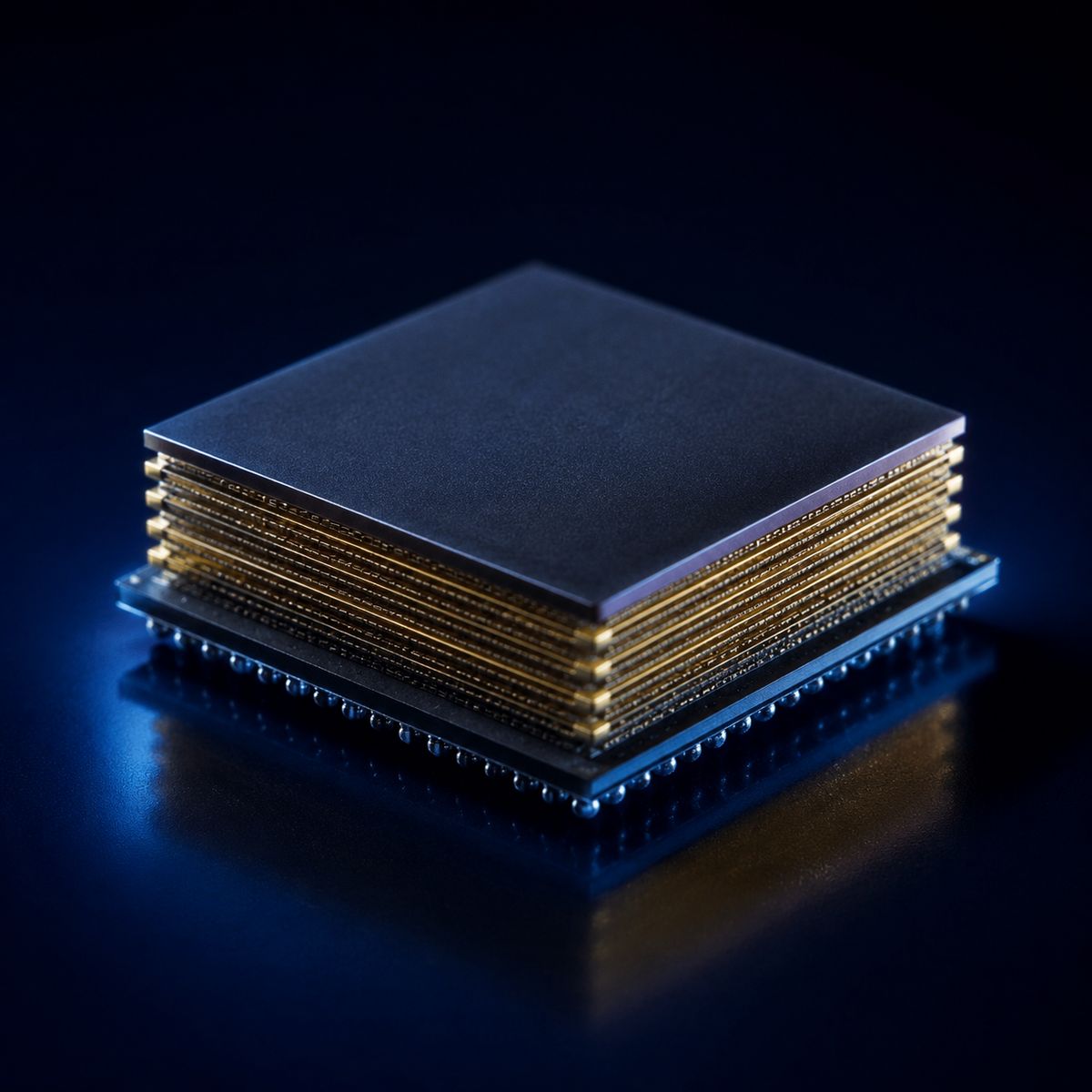
Micron Joins the Trillion Dollar Club
A company that most people could not name two years ago crossed $1 trillion in market cap this week.
Micron Technology. The Idaho based memory chip maker that spent decades being dismissed as a commodity cyclical, too boring for growth investors and too volatile for value investors, is now one of the most valuable companies on earth. It sits alongside Nvidia, TSMC, Samsung, and Broadcom in a club that did not exist in semiconductors five years ago.
Trump praised Micron at a rally in New York last week. The US Trade Representative spoke at the opening of a Micron facility in Virginia discussing semiconductor tariffs. The only American manufacturer of advanced memory chips now has explicit presidential backing and potential tariff protection from cheaper Korean and Chinese imports.
That is not a cycle. That is a structural repositioning of an entire industry riding a wave of FOMO.
Xiaomi Just Accidentally Confirmed The Memory Thesis
On the customer side of this trade, Xiaomi reported a nearly 60% profit drop this quarter.
The reason? Memory costs. Management called the surge a "new normal" and said they were absorbing the impact rather than passing it directly to consumers.
Think about what that means. One of the world's largest smartphone makers took a 60% profit hit and called it the new normal. They are not expecting relief. They are adapting their entire business around the assumption that memory is permanently more expensive than it used to be.
That is the pricing power thesis confirmed from the buyer side of the transaction.
TSMC Workers Are Next
Samsung workers threatened to strike over AI profits. They settled last week after the Labor Minister personally intervened at midnight.
Now TSMC employees are reportedly threatening the same thing. Management is said to be considering a 15% cut to employee bonuses despite record revenues, redirecting profits toward the massive capex required to build fabs in Arizona, Japan, and Germany.
The pattern is the same across the entire industry. AI infrastructure profits are so extraordinary that every major semiconductor company is now navigating a version of the same internal conflict. Workers who helped generate the profits want their share. Management needs those profits to fund the next generation of capacity.
SK Hynix solved it proactively. Samsung solved it reactively after three weeks of chaos. TSMC is about to find out which category they fall into.
SK Hynix Is Solving Problems Nobody Else Has Announced Yet
While Samsung was settling strikes and TSMC was dealing with bonus disputes, SK Hynix quietly unveiled new HBM technology designed to manage heat buildup inside the chip stack itself.
As AI systems push more compute into tighter spaces the thermal problem is becoming a genuine engineering constraint. Chips that run too hot throttle performance. SK Hynix is embedding the cooling solution directly into the memory architecture rather than relying on external thermal management.
This is what pure play focus looks like. While conglomerates navigate internal politics, SK Hynix is solving the next generation problem before competitors have publicly acknowledged it exists.
The Shortage Is Not Ending Anytime Soon
In case anyone needed a forward looking anchor after all of the above, analysts this week confirmed the global memory chip shortage is expected to persist well into 2027. Even with Samsung, SK Hynix, and Micron all boosting production, industry expansion plans through 2026 and 2027 are unlikely to bridge the supply gap.
New fabs take 3 to 5 years to build. The demand curve is moving faster than the construction timeline.
The Week in One Sentence
Micron hit $1 trillion. Xiaomi called memory costs the new normal. TSMC workers threatened Samsung-style strikes. SK Hynix is already solving next generation problems. The shortage runs through 2027.
Same story. Different angles. Every week the confirmation gets louder and clearer.
I hold a long position in DRAM ETF (ticker: DRAM). Not investment advice. Do your own research.

My current positions as of May 28, 2026. Sold a MU put yesterday and ok with both pocketing the premium or getting assigned by EOW.